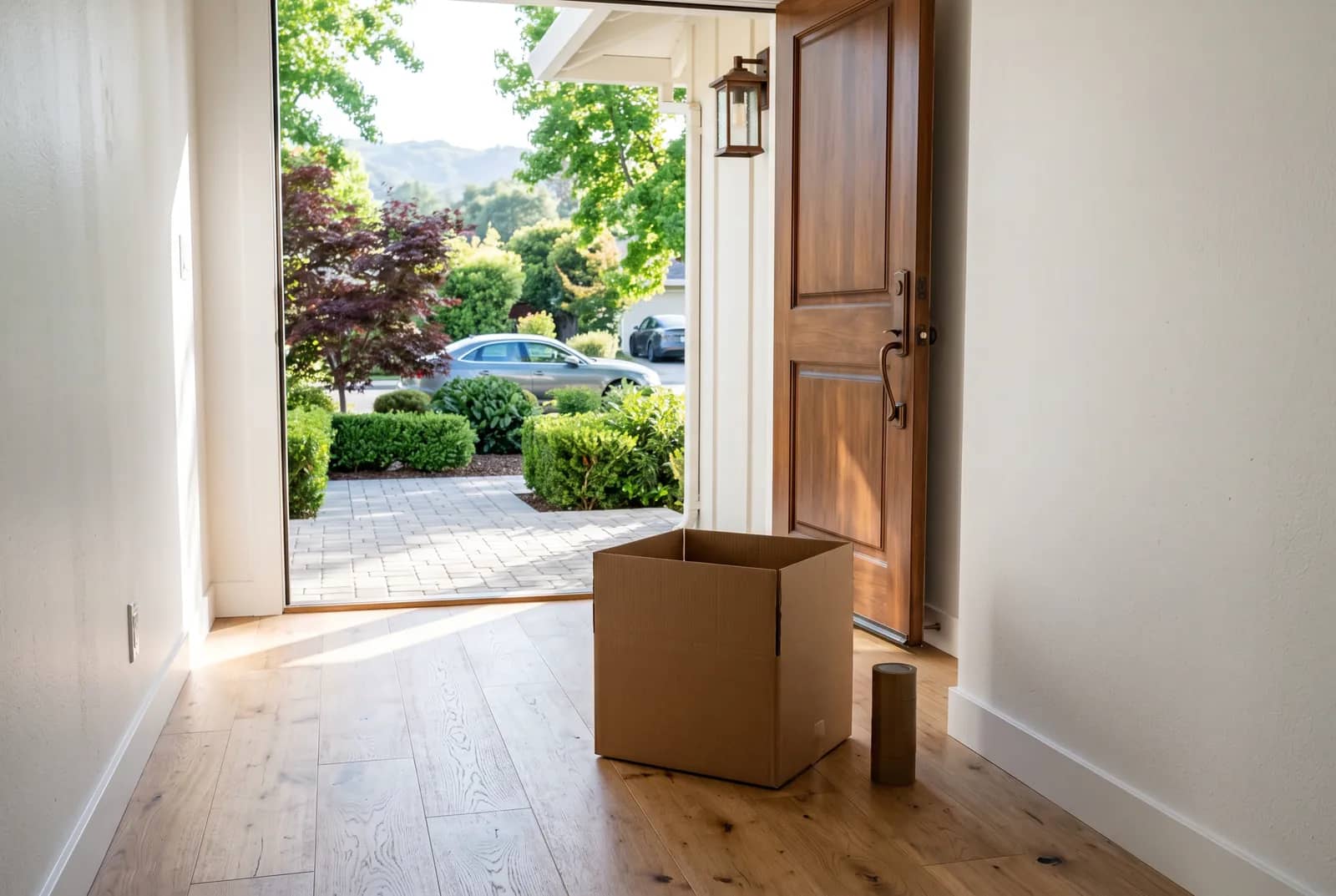
What came with the address
Inside the Monta Vista attendance zone the median sits around $3.55 million. One street outside it the same kind of house is closer to $2.8 million. Families move here for that line on the map and they are not wrong to, but the figure is not what matters to a locksmith. What matters is the traffic that produced it.
A house on a street like that is opened, between listing and closing, by an agent and a second agent, a stager and the crew who carried the furniture, a photographer, a general inspector, a roof inspector, a contractor pricing a bathroom, a gardener, and everyone who walked through two open houses. The lock box came off the door on the last day. Not every key that existed came back with it, because nobody was ever counting.
Add one more thing about this city: about 39 percent of the occupied homes are rented, so there is a fair chance the house you just bought was a rental at some point and has several leases of keys behind it. None of this is alarming. It is bookkeeping, and the first month is when you do it.
Week one: the free hour
Change every code in the house before you change anything else, because it costs nothing and takes about an hour. The keypad on the front door. The keypad on the garage jamb, which is the one most people forget and the one that opens the biggest door on the property. The gate, if it has one. The safe in the closet, if you have the combination and the manual.
While you are at each keypad, answer two questions. Does it have a mechanical keyway, and where is the key for it? On a house that has just changed hands the answer to the second one is usually no idea, and the fix is a key cut on the first visit you have for anything else. A dead keypad on a Tuesday evening is a $135 to $245 call, and a key cut in daylight is a small fraction of that.
Week one: the count and the one key
Walk the house with a notepad and count cylinders rather than doors. Front knob, front deadbolt, back door, garage side door, gate, shed, mailbox. Write down the brand stamped around each keyhole, because that decides whether they can all take the same key or whether one cylinder needs swapping.
Then one visit. Rekeying is $29 to $47 per cylinder with the second and third at the low end, the $89 service call counted once for the stop, and at the end of it every key handed out during the sale is scrap metal. This is the single most useful thing done in the first month and it is also the cheapest.
If the walk turns up a door between the garage and the kitchen with only a passage knob on it, write that down and leave it for week two. That is the weakest door on most properties, and it deserves its own decision rather than an impulse at the end of a visit.
Week two: the door before the lock
Open each exterior door wide and throw the bolt with the thumb turn while the door hangs in the air. Then shut the door and do it again. If the bolt runs out freely in the air and has to be forced with the door closed, the leaf has dropped on its hinges and the bolt is meeting the edge of the strike rather than the middle of it. On a house built before the seventies this is the normal finding, not the exception.
Take one screw out of a strike plate while you are there. Three-quarters of an inch means the plate is fastened to trim. Three-inch screws through the jamb into framing, on the strike and on the hinges, is the change that does the most for the least on any house of this age, and it is part of a visit rather than something bought.
This is the step people skip, and skipping it is what makes the next step disappointing. A lock is only ever as good as the wood it is screwed into and the alignment it works in.
Weeks three and four: what is worth buying, in order
First, a deadbolt anywhere there is only a latch, at $129 to $339 fitted. The garage-to-kitchen door is usually the one, and it sits behind a large door that opens from the street with a remote.
Second, a spare key that has been tested on the door and lives somewhere that is not a hiding place. A neighbor on the same street, or a decent lock box out of sight on something solid. The three classic places under the mat, over the frame and in the false rock are the three places anyone looks first.
Third, and only now, the keypad if you want one, at $199 to $495. It goes on the door the household actually uses rather than the one that faces the street, and it goes on after week two rather than before, because a motor cannot lift a door that has dropped. That order is the whole argument of this company, compressed into one paragraph.
Two things worth doing that nobody puts on the list
Clear the garage opener's memory. On almost every opener made in the last thirty years there is a learn button on the motor head: hold it until the light goes out, and every remote the unit has ever known is forgotten. Then re-pair your own remotes and the keypad on the jamb. It takes two minutes, it costs nothing, and it deals with the remote that went with the car the previous owners sold, which no rekey will ever touch.
And do the locks in the week you close rather than the week you move in. The keys that matter are the ones that were handed out before there was any furniture in the house, and the month between those two weeks is the month when nobody is there. A visit into an empty house is also the quickest visit anyone will ever have: every door is clear, nothing has to be moved, and the whole list gets done in one stop with the $89 counted once.
Quick answers
Do I need new locks after buying, or is a rekey enough?+
A rekey is enough unless a lock has actually failed. New pins retire every key handed out during the sale, at $29 to $47 a cylinder, rather than $129 to $339 for hardware you did not need. Anyone quoting new locks purely to give you a new key is selling hardware.
The house came with a keypad on the front door. Keep it?+
Usually yes, with three conditions: change the code, find out whether it has a mechanical keyway, and have a key cut for it and tested. Then check the door itself, because a keypad on a door that has dropped will keep eating batteries whoever owns it.
How much is the whole first-month list?+
Most of it is free: codes, the opener memory, the two tests on the door. The paid parts are the rekey at $29 to $47 a cylinder, a deadbolt where there is only a latch at $129 to $339, and a keypad at $199 to $495 if you want one. The $89 visit is inside the figure and counted once for the stop.
Need it handled rather than read about?
(669) 274-3850